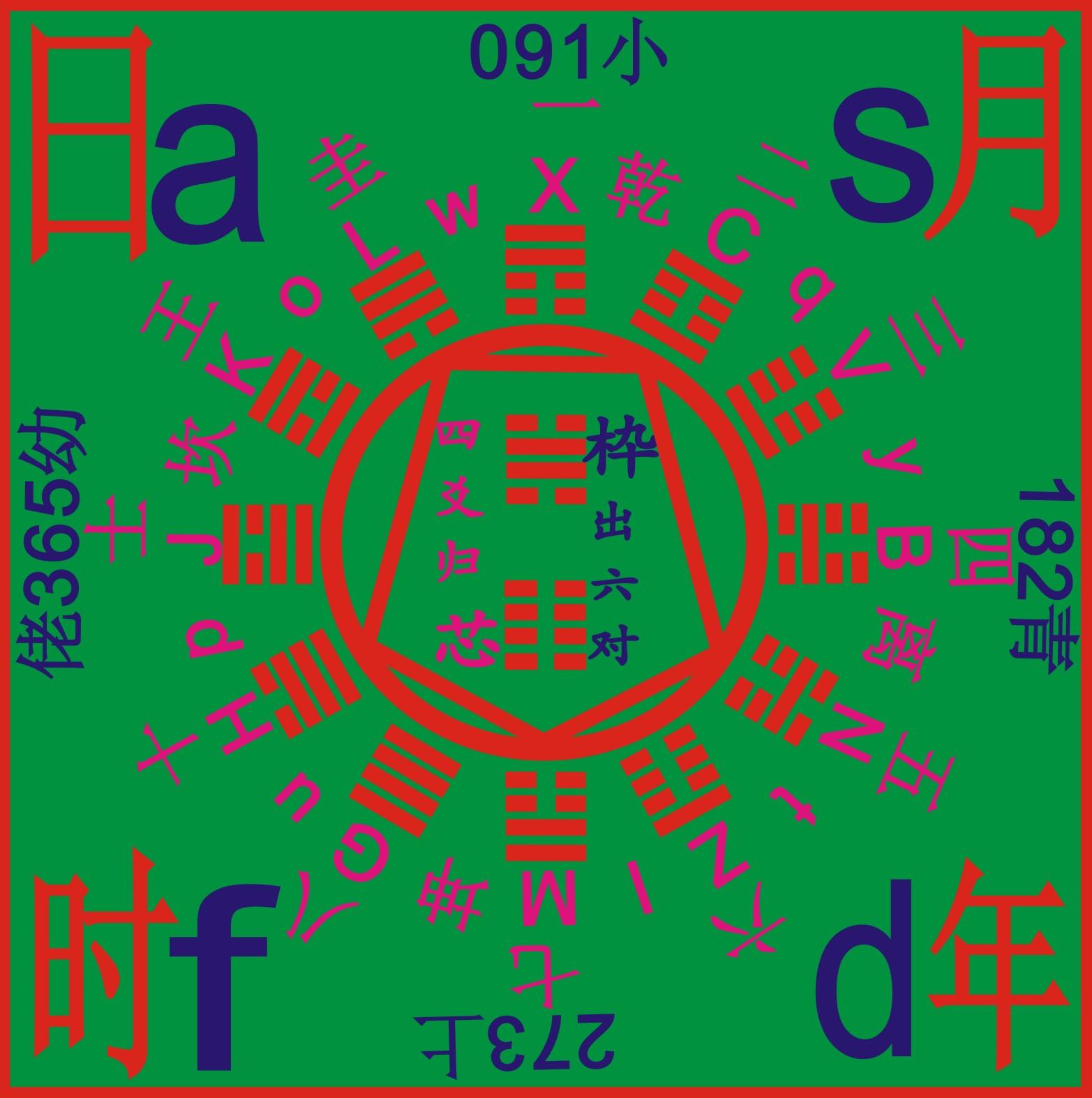
5a历宋齡点系统
公历追天。它想和太阳同步,所以不停地算——4年加1天,100年不加,400年再加1天。越算越复杂,越调越没规律。它以为追得上天,但天不会停下来等它,就如儿子与父亲,出生差距永远追不齐。The Gregorian calendar chases the sky. It tries to sync with the sun, calculating endlessly — add 1 day every 4 years, skip every 100, add back every 400. The more it calculates, the more complex and patternless it becomes. It thinks it can catch up with heaven, but heaven won't wait, just as the gap between a father and son at birth can never be closed.
农历追地。它想和月亮同步,所以不停地看——29天不够就30天,30天多了就闰月。19年7闰,闰来闰去,节气还是漂。它以为追上了地,但地也不会永远变成你的,就像沧海桑田,今年可能是山,百年后可能是海。The Lunar calendar chases the earth. It tries to sync with the moon, watching endlessly — 29 days isn't enough so add a 30th, 30 is too many so add a leap month. Seven leap years in nineteen, and yet the solar terms still drift. It thinks it caught the earth, but the earth won't stay yours forever — like the sea turning into fields, what's a mountain this year may be an ocean in a century.
天就是天,地就是地。人不是天,人也不是地。人活在天地之间,必须和它们拉开一点距离。就像朋友之间,有距离才有思念,才有再相逢的喜悦。Heaven is heaven, earth is earth. Humans are neither heaven nor earth. We live between them and must keep a certain distance. Like friends — only with distance comes longing, and the joy of reunion.
时毛,就是站在天地之间的那个位置。时辰太小,辰为龙,大家都在争地。时空太大,空为空间,大家都想上天。时毛中性——不大不小,刚好容一个人站稳。不争地,也不上天。就在地上,在时间里,好好活着。Shi-Mao is the place of standing between heaven and earth. Shi-chen (hour) is too small — chen is the dragon, everyone fights for land. Shi-kong (space-time) is too vast — kong is space, everyone wants to reach heaven. Shi-Mao is neutral — not too big, not too small, just enough room for one person to stand firm. Not fighting for earth, not reaching for heaven. Right here on earth, in time, living well.
关于芯枠About Xinwa
芯枠世界文化传承平台,以"5a历宋齡点系统"为核心,致力于用数字组织世界、用文字分割世界,打造一个既有文化深度又有人文温度的时间秩序。The Xinwa World cultural heritage platform, centered on the "5a Calendar Songling Point System," is dedicated to organizing the world through numbers and dividing it through words, creating a temporal order with both cultural depth and human warmth.
公司成立于2024年,总部位于广东中山。我们相信:世界不需要"信一样的神",但需要"用一样的时间"。Founded in 2024 and headquartered in Zhongshan, Guangdong. We believe: the world doesn't need "the same god," but it needs "the same time."
伏羲画八卦,我画14卦Fuxi Drew 8 Trigrams, I Drew 14
中国文化所有的源头,都始于伏羲。伏羲画八卦,用一横一断,画出阴阳。三千年了,所有人都在伏羲画的八卦里打转。All sources of Chinese culture begin with Fuxi. He drew the eight trigrams with a single unbroken and broken line, creating yin and yang. For three thousand years, everyone has been circling within Fuxi's eight trigrams.
但我认为八卦已经不够用了。世界变了——科技霸凌、信息爆炸、全球互联、时间碎片化。八卦装不下了。But I believe the eight trigrams are no longer sufficient. The world has changed — technological dominance, information explosion, global connectivity, fragmented time. The eight trigrams can no longer contain it all.
所以我在八卦的基础上,画了14卦。不是推翻,是扩展。伏羲画三画卦,我画四画卦。八卦空心,道入难固,生一生二生三,三生万物,万物终死。14卦有余,不走极端,留有余地,种子重生。So I extended the eight trigrams into 14. Not to overthrow, but to expand. Fuxi drew three-line trigrams; I drew four-line ones. The eight trigrams are hollow — the Way enters but cannot stay. One births two, two births three, three births all things, and all things eventually perish. The 14 trigrams leave room — avoiding extremes, preserving space for seeds to be reborn.
伏羲 · 三画卦Fuxi · Three-Line Trigrams
5a历 · 四画卦5a Calendar · Four-Line Trigrams
伏羲画八卦,我画14卦。基于此而成5a历宋齡点系统。Fuxi drew eight trigrams, I drew 14. From this, the 5a Calendar Songling Point System was formed.
芯就是记忆,记忆就是灵魂The Core Is Memory, Memory Is Soul
身体会老,会死。但芯不会。芯就是记忆,记忆就是灵魂。The body ages and dies. But the core does not. The core is memory, and memory is the soul.
伏羲的芯在八卦里。女娲的芯在土地里。周公的芯在礼乐里。宋慶齡的芯在20:18里。他们的身体都佬了,但他们留下了东西,成为了我们的记忆——我们记住了,它就在;我们忘掉了,它就死了。Fuxi's core lives in the eight trigrams. Nüwa's in the earth. The Duke of Zhou's in ritual and music. Soong Ching Ling's in 20:18. Their bodies are gone, but they left behind what became our memory — as long as we remember, it lives; once we forget, it dies.
5a历宋齡点系统不是新发明。它只是把古人留下的东西,重新整理了一遍:用"时"换年,用"毛"装月,用"周"定日,用"人肖"连天,用"物性"连地。只要有人用这套历法,他们的芯就不会死。The 5a Calendar Songling Point System is not a new invention. It simply reorganized what the ancients left behind: using "Shi" for years, "Mao" for months, "Zhou" for days, "Human Signs" to connect with heaven, and "Object Properties" to connect with earth. As long as someone uses this calendar, their cores will never die.
5a历的时间语言The Time Language of 5a Calendar
| 层级Level | 5a历用语5a Term | 说明Description |
|---|---|---|
| 时Shi | 年Year | 如年,365/366天,+1-1移动As year, 365/366 days, ±1 day shift |
| 毛Mao | 月Month | 如月,29天,固定不变As month, 29 days, fixed |
| 编码Code | 日Day | 如日,001~365/366,三位数As day, 001–365/366, three digits |
| 点Point | 小时Hour | 如小时,1点=1小时,24点=1天As hour, 1 point = 1 hour, 24 points = 1 day |
月的根本问题The Fundamental Problem of Months
公历的月Gregorian Month
没有沾边真正的月。2月28天、8月31天,是罗马皇帝凯撒和奥古斯都拍脑袋决定的历史权术,不是天文规律。你看那些拍脑袋的国家文明还在吗?Has nothing to do with the real moon. February with 28 days, August with 31 — these were arbitrary decisions by Roman emperors Caesar and Augustus, not astronomical laws. Are those civilizations that decided by whim still around?
农历的月Lunar Month
朔望月29.53059天,用29和30凑。大月30天就是"满",满则溢,溢则乱。19年7闰也没解决30满的问题——结果吴三桂为了陈圆圆引满清入关,最终慈禧太后孤儿寡母结束。The synodic month is 29.53059 days, patched together with 29 and 30. A long month of 30 days means "full" — full overflows, overflow brings chaos. Even 7 leap years in 19 couldn't solve the problem of 30-day fullness.
5a历的月5a Calendar Month
不用朔望月,直接固定29天。比朔望月少0.53059天,不是"欠",是"留余地"。不是"满了再加",是"空了再补"。Not using the synodic month, directly fixing at 29 days. 0.53059 days less than the synodic month — not a "deficit" but "leaving room." Not "add more when full" but "fill in when empty."
月——29天,被毛固定Month — 29 Days, Fixed by Mao
5a历把月固定为29天,除了84年出现一次最后毛28天,永远不变。The 5a Calendar fixes each month at 29 days, unchanged forever — except for the last Mao which has 28 days once every 84 years.
29天分给五个"周a"和四个周一至周六,单休周a5天,双休周a周六9天,每个月结构完全相同。不需要背口诀,不需要算"这个月有几天"。29 days are divided into five "Zhou-a" and four Monday-to-Saturday weeks. Single-rest Zhou-a has 5 days, double-rest Zhou-a Saturday has 9 days. Every month has the exact same structure. No need to memorize rules or calculate "how many days this month."
13个月名:珠毛、二毛、三毛、四毛、五毛、六毛、七毛、八毛、九毛、十毛、土毛、王毛、圭毛。13 month names: Zhu Mao, Er Mao, San Mao, Si Mao, Wu Mao, Liu Mao, Qi Mao, Ba Mao, Jiu Mao, Shi Mao, Tu Mao, Wang Mao, Gui Mao.
- 珠毛
- 二毛
- 三毛
- 四毛
- 五毛
- 六毛
- 七毛
- 八毛
- 九毛
- 十毛
- 土毛
- 王毛
- 圭毛
周——被毛固定,周公吐哺Week — Fixed by Mao, Duke of Zhou's Legacy
周公吐哺,天下归心。他不是靠权力让人归附,是靠秩序。The Duke of Zhou spat out his meal to attend to guests, and the world's hearts turned to him. He gained allegiance not through power, but through order.
公历里的"周"是漂浮的——它不属于月,属于自己。每个月1号是星期几都不一样。5a历把"周"固定在了"月"里。每个月29天,固定5个"周a"。周被毛收住了。In the Gregorian calendar, the "week" floats — it belongs neither to the month nor to itself. The 1st of each month falls on a different day of the week. The 5a Calendar anchors the "week" within the "month." Each month has 29 days with a fixed 5 "Zhou-a." The week is held by Mao.
周公定礼乐,让天下归心。5a历定周制,让时间归位。The Duke of Zhou established ritual and music, bringing all hearts together. The 5a Calendar establishes the week system, bringing time back to its place.
21哥——时间的相位21 Ge — Phases of Time
5a历的41412年,由21哥组成。每哥的天数相同(每哥约720,258天),但起始编码不同。每哥的起始编码相差15天或16天。The 41,412 years of the 5a Calendar consist of 21 Ge. Each Ge has the same number of days (approximately 720,258 days each), but different starting codes. The starting codes of each Ge differ by 15 or 16 days.
| 哥Ge | 起始编码Start Code | 差值Diff | 哥Ge | 起始编码Start Code | 差值Diff |
|---|---|---|---|---|---|
| 01 | 001 | — | 12 | 165 | +15 |
| 02 | 014 | +13 | 13 | 181 | +16 |
| 03 | 029 | +15 | 14 | 196 | +15 |
| 04 | 044 | +15 | 15 | 211 | +15 |
| 05 | 059 | +15 | 16 | 227 | +16 |
| 06 | 074 | +15 | 17 | 243 | +16 |
| 07 | 089 | +15 | 18 | 258 | +15 |
| 08 | 104 | +15 | 19 | 274 | +16 |
| 09 | 119 | +15 | 20 | 289 | +15 |
| 10 | 134 | +15 | 21 | 305 | +16 |
| 11 | 150 | +16 |
每哥的起始编码不同,但终点相同。起点不同,步长不同,但在41412年的终点,全部相遇。Each Ge has a different starting code, but the same endpoint. Different starts, different steps — yet all converge at the end of 41,412 years.
完整的结构The Complete Structure
每个哥1972时,按"4时加1日"连续走,21个哥首尾相连。
每个妹84年,按"84年减1日"连续走,493个妹首尾相连。
同一个41412枠,用两种方式同时计数。Each Ge has 1972 Shi, progressing by "+1 day per 4 Shi," 21 Ge connected end to end.
Each Mei has 84 years, progressing by "−1 day per 84 years," 493 Mei connected end to end.
The same 41,412 Kuang, counted in two ways simultaneously.
谁更接近回归年?Who Is Closer to the Tropical Year?
5a历5a Calendar
公历(格里历)Gregorian
回归年Tropical Year
儒略历完善,格里历简化Julian Refines, Gregorian Simplifies
儒略历Julian
格里历Gregorian
5a历
60甲子60年转一圈,短到每个帝王都想改一改。5a历41412年转一圈,长到能容纳所有人。The 60-year Jiazi cycle is so short that every emperor wanted to change it. The 5a Calendar's 41,412-year cycle is so long it can contain everyone.
核心特性Core Features
29天固定29 Days Fixed
每个月29天,永远不变,月与周永久对齐。不需要背口诀,不需要算"这个月有几天"。Each month has 29 days, forever unchanged, months and weeks permanently aligned. No need to memorize rules or calculate "how many days this month."
周被毛固定Weeks Fixed by Mao
周不再漂浮,被"毛"收住。每月5个周a,周一至周六各出现4次,排班永久固定。Weeks no longer float, held by "Mao." Each month has 5 Zhou-a, Monday through Saturday each appears 4 times, the schedule is permanently fixed.
空九补九Skip Nine, Fill Nine
平年空九,闰年补九——不是"满了再加",是"空了再补"。一个追,一个补。Common years skip Nine, leap years fill Nine — not "add more when full" but "fill in when empty." One chases, one fills.
84年周期84-Year Cycle
50闰34平,4年加1日,84年减1日。493个84年走完41412枠,精度高于公历。50 leap years, 34 common years, add 1 day every 4 years, subtract 1 day every 84 years. 493 × 84 years complete 41,412 Kuang, more precise than the Gregorian calendar.
永远正数Always Positive
不追天,不追地,保持距离,从不振荡。时毛中性,不大不小,刚好容一个人站稳。Not chasing heaven, not chasing earth, maintaining distance, never oscillating. Shi-Mao is neutral — not too big, not too small, just enough room for a person to stand firm.
21哥相位21 Ge Phases
每哥起始编码不同,但终点相同。起点不同,步长不同,在41412枠的终点全部相遇。Each Ge has a different starting code, but the same endpoint. Different starts, different step sizes — all converge at the end of 41,412 Kuang.
文字与数字Words and Numbers
文字是组织世界的。有了文字,人才有了"我们"的概念,才能沟通、合作、把记忆传下去。Words organize the world. With words, humans gained the concept of "us," enabling communication, cooperation, and the transmission of memory.
数字是分割世界的。有了数字,人才有了"边界"的概念,才有等级、竞争、"你多我少"。Numbers divide the world. With numbers, humans gained the concept of "boundaries," leading to hierarchy, competition, and "you have more, I have less."
但5a历宋齡点系统反过来用——用数字组织世界,用文字分割世界。But the 5a Calendar Songling Point System reverses this — using numbers to organize the world, and words to divide it.
数字是统一的。29天、059、84年、41412年、20:18。所有人用同一套数字,不分宗教、不分国家、不分民族。文字是各自的,你可以叫它"珠毛""二毛",他可以用他自己的语言称呼同样的月份。The numbers are unified. 29 days, 059, 84 years, 41,412 years, 20:18. Everyone uses the same set of numbers, regardless of religion, nation, or ethnicity. The words are individual — you can call it "Zhu Mao" or "Er Mao," others can use their own language for the same months.
数字让世界可通,文字让世界可亲。Numbers make the world connected, words make the world intimate.
宋齡点——20:18Songling Point — 20:18
1981年5月29日,宋慶齡去世。家中挂钟停在20:18。没有断电,没有卡壳,齿轮也没有坏。后来的人试着调过,怎么调都走不动。现在,那只钟还放在北京宋慶齡故居里,指着20:18,再也没有走过。On May 29, 1981, Soong Ching Ling passed away. The wall clock in her home stopped at 20:18. No power failure, no jam, no broken gears. Later, people tried to adjust it, but no matter what they did, it wouldn't move. Today, that clock still sits in Beijing's Soong Ching Ling Former Residence, pointing at 20:18, never having moved again.
20和18之间,隔着19——1919,五四运动。她的家族经历了辛亥革命,她见证了共和国的诞生。她的一生横跨整个20世纪,从帝制到民国,从民国到新中国。Between 20 and 18 lies 19 — 1919, the May Fourth Movement. Her family lived through the 1911 Revolution, and she witnessed the birth of the Republic. Her life spanned the entire 20th century, from empire to republic, from republic to new China.
5a历的计时中点就在这里——不是从神开始,是从人开始;不是从诞生开始,是从停中开始。The temporal midpoint of the 5a Calendar is right here — not starting from gods, but from humans; not from birth, but from the moment of stopping.
24步循环24-Step Cycle
- 十
- 土
- 王
- 圭
- 一
- 27
- 26
- 25
- 23
- 22
- 21
- 20
- 19
- 18
- 17
- 16
- 28
- 二
- 三
- 四
- 五
- 六
- 七
- 八
跳过24,跳过九——因为"自己"要避开,"九"要空了才能倒上。三个数字,三个历史坐标,全装进24步循环里。Skip 24, skip Nine — because "self" must be avoided, and "Nine" must be emptied to count backwards. Three numbers, three historical coordinates, all contained in the 24-step cycle.
28宿祖月28 Lunar Mansions & Ancestor Months
古人留下了二十八星宿,留在天上。古人留下了二十八位历史人物,留在书里。每个毛,都是一个"古人月"。它在告诉使用它的人:你现在过的这个月,古人也过过。The ancients left the 28 lunar mansions in the sky. They left 28 historical figures in the books. Each Mao is an "Ancestor Month." It tells its users: the month you are living now, the ancients lived it too.
其余二十四宿,每一宿都配着一位古人,在芯枠世界里等你。The remaining 24 mansions, each paired with an ancient figure, await you in the Xinwa World.
他们的身体都佬了,但他们的芯还在。Their bodies are gone, but their cores remain.
五千年、七千年、九千年—— 争的不是长短,是记忆有没有断。中华文明,是世界上唯一没有断过的文明。记忆需要用芯才能长久。Five thousand, seven thousand, nine thousand years — the debate isn't about length, but whether memory has been unbroken. Chinese civilization is the only one in the world that has never been severed. Memory needs a core to endure.
核心规则速查Core Rules Quick Reference
| 规则Rule | 内容Content |
|---|---|
| 卦象基础Trigram Basis | 伏羲八卦 → 5a历14卦Fuxi's 8 trigrams → 5a's 14 trigrams |
| 纪元原点Epoch Origin | 伏羲女娲(7942枠)Fuxi & Nüwa (7942 Kuang) |
| 计时中点Time Midpoint | 宋慶齡钟表停止——20:18Soong Ching Ling's clock stopped — 20:18 |
| 每毛天数Days per Mao | 29天,永远不变,84枠最后毛28天29 days, forever unchanged, last Mao 28 days in 84 Kuang |
| 月单位Month Unit | 毛(13个:珠毛~圭毛)Mao (13: Zhu Mao ~ Gui Mao) |
| 平年Common Year | 12个月,空九12 months, skip Nine |
| 闰年Leap Year | 13个月,有九毛13 months, includes 9th Mao |
| 周固定Week Fixed | 被毛固定,每月5个周a,84枠最后毛4个周aFixed by Mao, 5 Zhou-a per month, 4 in last Mao of 84 Kuang |
| 枠起点Kuang Start | 随21哥起始编码移动Shifts with 21 Ge starting codes |
| 时(年)Shi (Year) | 如年,+1-1移动As year, ±1 day shift |
| 编码(日)Code (Day) | 001~365/366001–365/366 |
| 点(小时)Point (Hour) | 1点=1小时,24点=1天1 point = 1 hour, 24 points = 1 day |
| 84年周期84-Year Cycle | 50闰 / 34平50 leap / 34 common |
| 21哥21 Ge | 每哥1972时,4时加1日,起始编码不同Each Ge: 1972 Shi, +1 day per 4 Shi, different start codes |
| 493妹493 Mei | 每妹84年,84年减1日Each Mei: 84 years, −1 day per 84 years |
| 总周期Total Cycle | 41412枠41,412 Kuang |
| 总天数Total Days | 15,125,414天15,125,414 days |
| 总毛数Total Mao | 521,583个毛521,583 Mao |
| 平均年长Mean Year | 365.2423天365.2423 days |
| 查询结构Query Structure | 枠固定,哥可查,妹可查,时+1-1Kuang fixed, Ge searchable, Mei searchable, Shi ±1 |
芯枠世界:时间哲学与历法重构Xinwa World: A Philosophy of Time & Reconstruction of the Calendar
一份完整的时间哲学与历法重构说明。从公历"追天"、农历"追地"的困境出发,讲清5a历宋齡点系统为什么不再追赶、而是"站在天地之间",并完整给出14卦、21哥、八十四年周期的数学骨架与现实应用。A complete exposition of the philosophy of time and the reconstruction of the calendar. Starting from how the Gregorian calendar "chases the sky" and the lunar calendar "chases the earth," it explains why the 5a Calendar Songling Point System stops chasing and instead "stands between heaven and earth," and lays out the full mathematical framework of the 14 trigrams, 21 Ge and the 84-year cycle, together with real-world applications.
全书十一章 + 两附录,从问题、哲学、数学到应用,一次看清全貌。Eleven chapters plus two appendices — from the problem, philosophy and mathematics to applications, the whole picture at a glance.
联系我们Contact Us
枠园-九枠-汉族-客家凌 从江西红色故都上珠排出发,在From Shangzhupai, the Red Capital of Jiangxi, to 广东中山Zhongshan, Guangdong
时间在这里被重新丈量Time is remeasured here